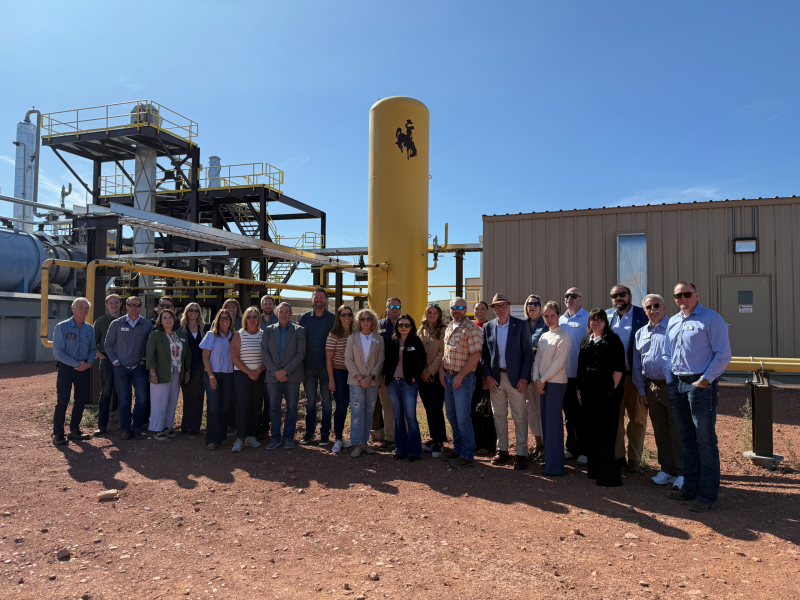
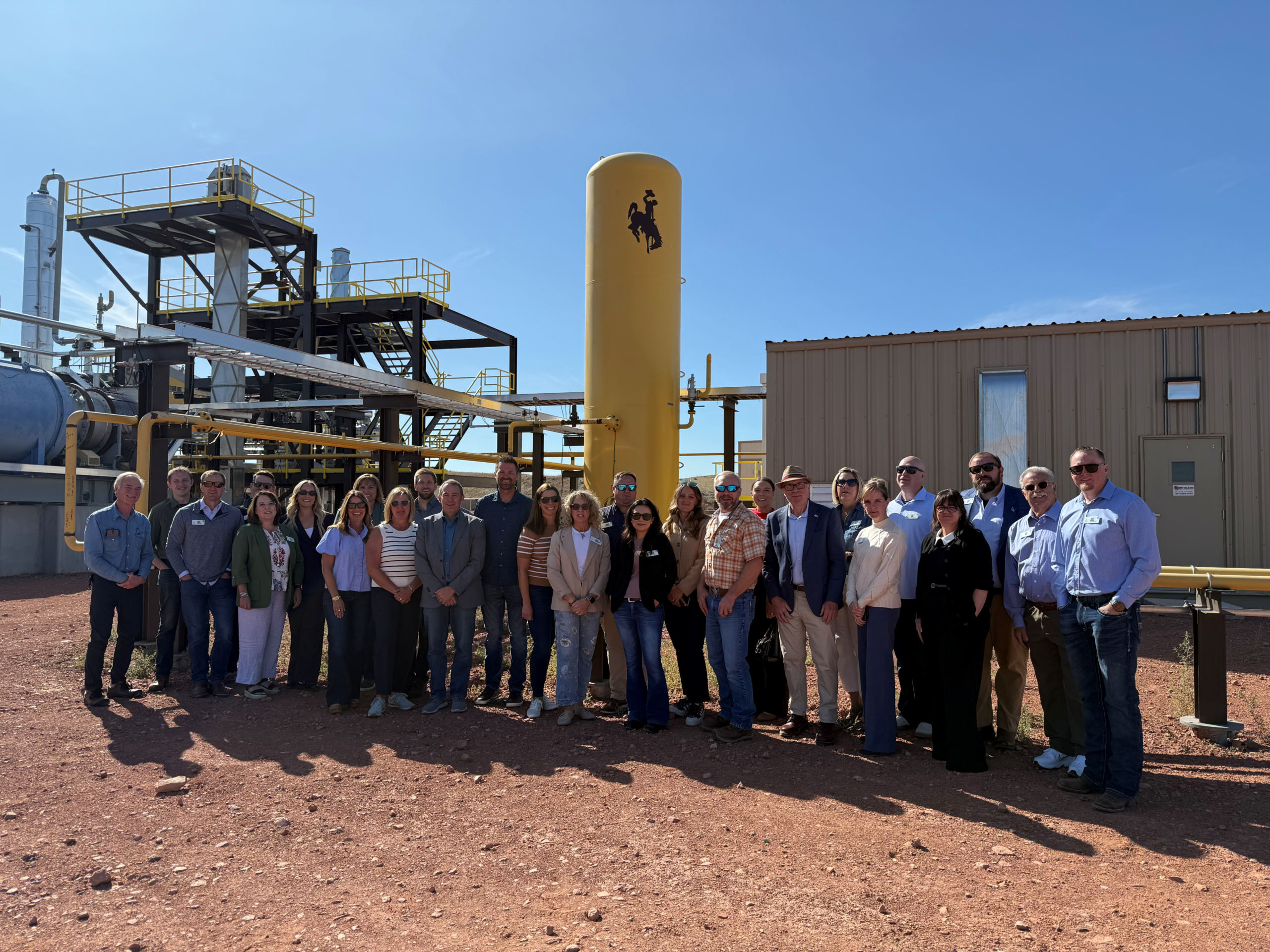
Gillette, Wyo. – The Wyoming Business Council (WBC) Board of Directors met in Gillette on Sept. 15–16 for a work session and its regular quarterly meeting, touring Campbell County’s economic development initiatives, hearing directly from Wyoming businesses and communities, and acting on items supporting the state’s economic future.
Work Session: Hearing From the People Doing the Work
On Tuesday, the board toured key local economic development efforts and heard firsthand from Wyomingites whose work shows WBC’s model in action.
Greyson Buckingham, founder of DISA Technologies, shared how his Wyoming company advanced through WBC’s startup-support pipeline, from an early Kickstart grant to equity investment from Wyoming Venture Capital (WYVC). That early support helped DISA attract $183 million in institutional capital and, most recently, expand into two companies, including a technology operation based in Mills. Buckingham told the board that community and state support in the early days was a key reason the company chose to build and stay in Wyoming, and described a goal of creating significant jobs in the state that once seemed out of reach but now feels within grasp.
Mark Cowan, Sweetwater County Treasurer, shared how his community used WBC’s Assessment to Action (A2A) process to tackle a long-standing power-capacity challenge that had stalled economic growth for years. Rather than wait for an outside fix, local leaders partnered with WBC to break the problem into workable parts, meet weekly, and build a real plan – one that has since grown into a regional effort involving neighboring communities. “We wouldn’t be here without the Business Council’s help,” Cowan told the board.
This story reflects a broader pattern: roughly 88% of participating A2A teams have made significant headway on challenges that had gone unresolved for years, with most continuing the work on their own over time.
In his intro, CEO Josh Dorrell pointed to a year of significant progress and a clear opportunity ahead. “The future in Wyoming is bright, and we’re central to it,” Dorrell said, describing strong alignment among the board, WBC’s team, and the thousands of Wyomingites who took part in the agency’s statewide listening efforts this summer.
Board Meeting: Strong Returns and Action Items
On Wednesday, the board held its regular quarterly meeting, opening with welcome remarks from Gillette Mayor Shay Lundvall, who described the “once-in-a-generation opportunities” underway in Campbell County. “We have it,” he said. “We’re ready.”
The board reviewed various committee reports, including standout returns on the state’s key investment programs:
- Wyoming Venture Capital (WYVC) has helped drive $307 million in total capital into Wyoming startups, including $283.6 million in private capital alongside $23.5 million in state investment – a 14-to-1 leverage ratio across 15 Wyoming companies. Just eight years ago, Wyoming ranked 51st in the nation, behind every state plus Puerto Rico, for venture capital access.
- Kickstart, WBC’s early-stage grant program that is currently on pause, has generated a 300-to-1 leverage ratio, with early grants helping companies attract more than $266 million in follow-on funding and reach a combined valuation exceeding $900 million. Of the companies in the program’s first round, 55% are still operating and have grown their workforces by 96%.
During his CEO report, Dorrell also reviewed the agency’s progress on its goals for the year. He spoke at length about the first and most enduring of those goals – building trust and statewide alignment – describing it as work that is never finished. “Will we ever be able to check off goal one? I don’t think so. It will always be goal one,” he said.
He pointed to several signs of progress: a summer spent listening to Wyomingites across the state, a clean independent financial audit that should reinforce confidence in WBC’s stewardship of state funds, and a team that has stayed committed through a demanding year – noting that some 50 people applied for the agency’s most recent openings. “The reason they want to work for the Business Council isn’t for a job,” he said. “It’s for a mission.”
He also highlighted the 2027–2028 supplemental budget request now advancing to the Governor’s office, and statute modernization moving through the Legislature’s Joint Minerals, Business & Economic Development Committee.
Expanding Broadband Across Wyoming
The board received an update on WBC’s broadband program, which is directing nearly $250 million in federal funding through the BEAD and Capital Projects Fund programs to connect more than 45,000 homes and businesses across Wyoming that previously lacked high-speed service. Under the BEAD program alone, participating internet service providers are investing $61.6 million of their own capital alongside the federal funds, connecting more than 32,000 locations statewide – another example of coordinated public dollars drawing private investment into Wyoming communities.
Building Resilient Communities
The board reviewed the first Barrier to Growth Loan application under the new Building Resilient Communities program rules: a $794,500 request from the City of Casper to help replace the 45-year-old Prospector Chairlift at Hogadon Basin Ski Area. The lift is the ski area’s sole operating system and supports an estimated $2.1 million in annual economic activity and at least 27 jobs; the WBC loan would close the final gap on a $4 million project that has already drawn roughly $2.5 million in local and private funding. The board unanimously recommended the project for funding which now advances to the State Loan and Investment Board (SLIB) for final approval at its Oct. 1 meeting.
Supporting Wyoming Businesses
The board also considered two 50/50 loan participations, which pair WBC financing with a local lender to support growing Wyoming businesses. The board approved a $319,995 participation supporting Sheridan Pet Care, a veterinary practice in Sheridan that recently opened its permanent location, securing long-term financing on favorable terms. A second 50/50 loan request from a Teton County business did not receive board approval after members raised questions about the fit for the program – a reflection of the careful, case-by-case scrutiny the board applies to each request.
Recordings of the work session and regular meeting are available on the WBC YouTube channel.